
Turn Your Existing Site Into an AI🧠 Optimized Sitemap + Report
Transform your current website crawl into a smarter structure built for stronger AI discovery, clearer SEO signals, and a better user experience.
✓ Built on your existing VisualSitemaps crawl ✓ Shareable outputs for teams and clients ✓ Start free for 7 days
Improve AI Discovery
Help AI systems interpret your structure more clearly
Strengthen SEO Architecture
Reveal hierarchy, topic, and page-level opportunities
Simplify UX Paths
Create cleaner navigation and more focused journeys
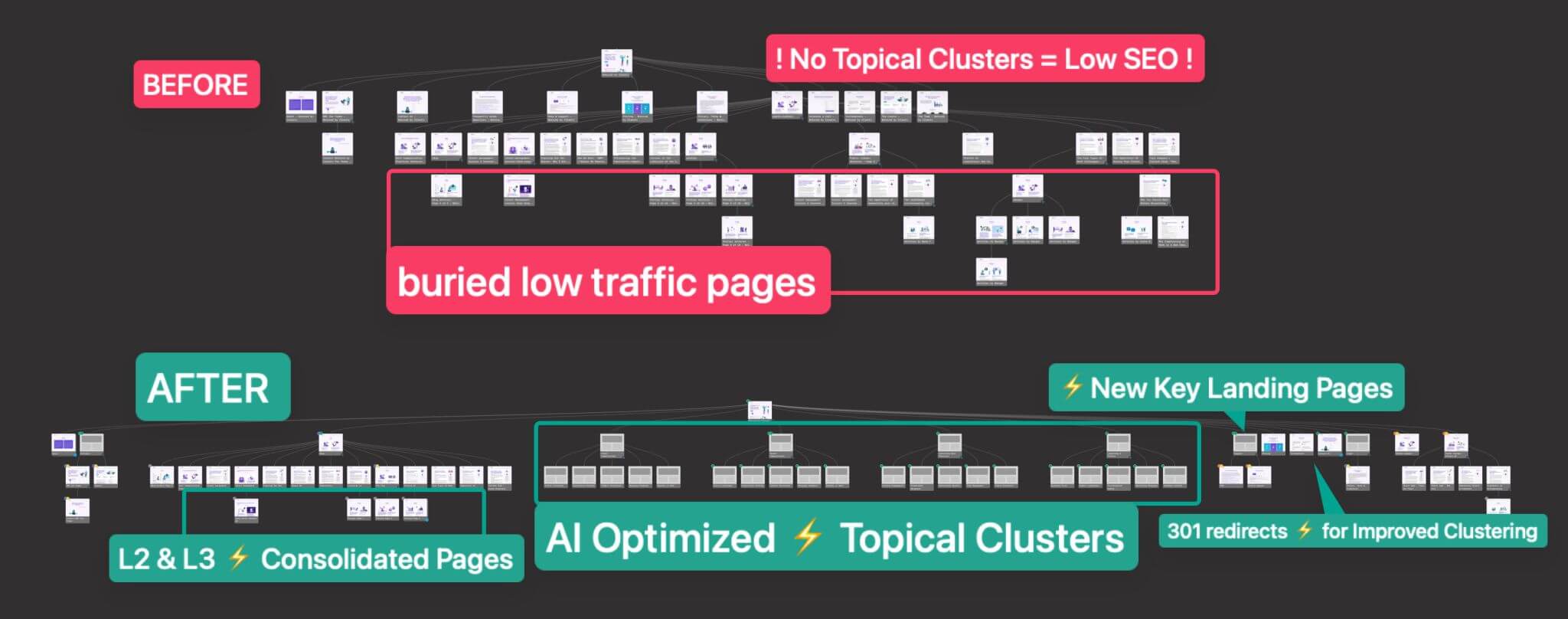
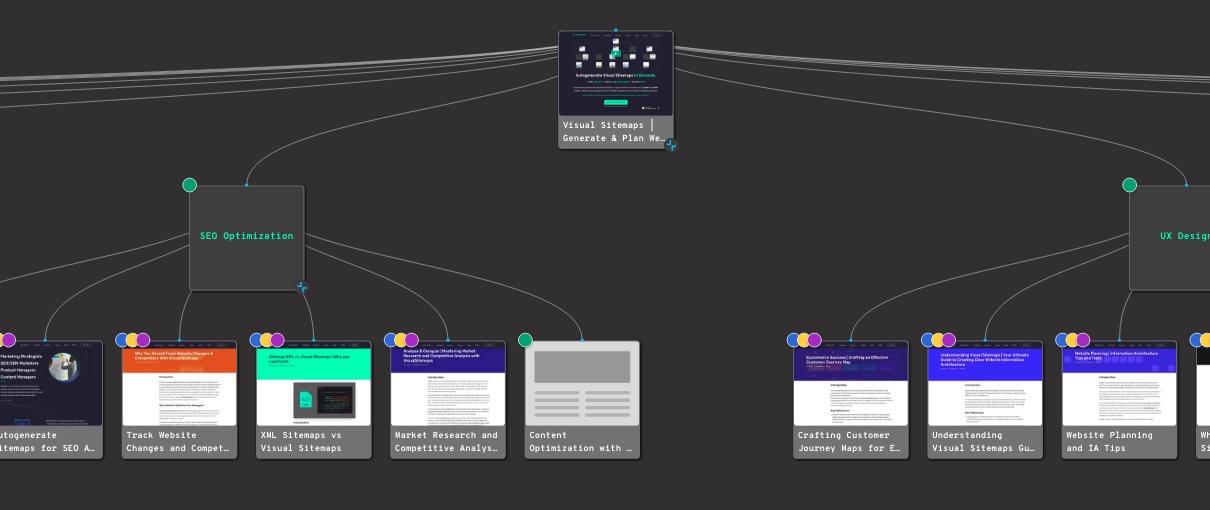
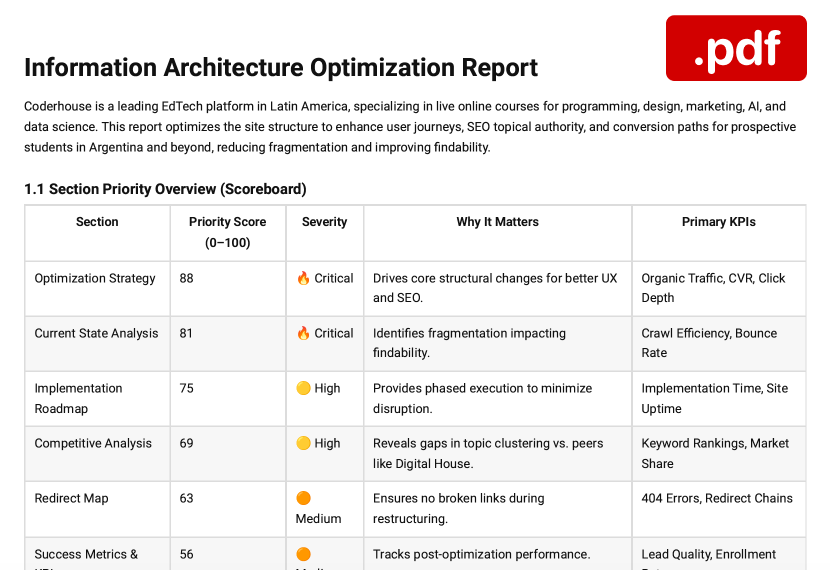
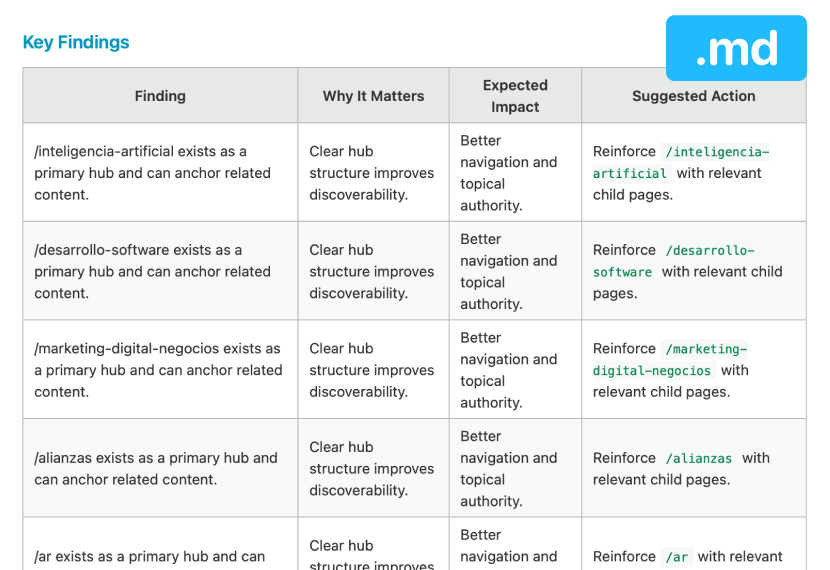
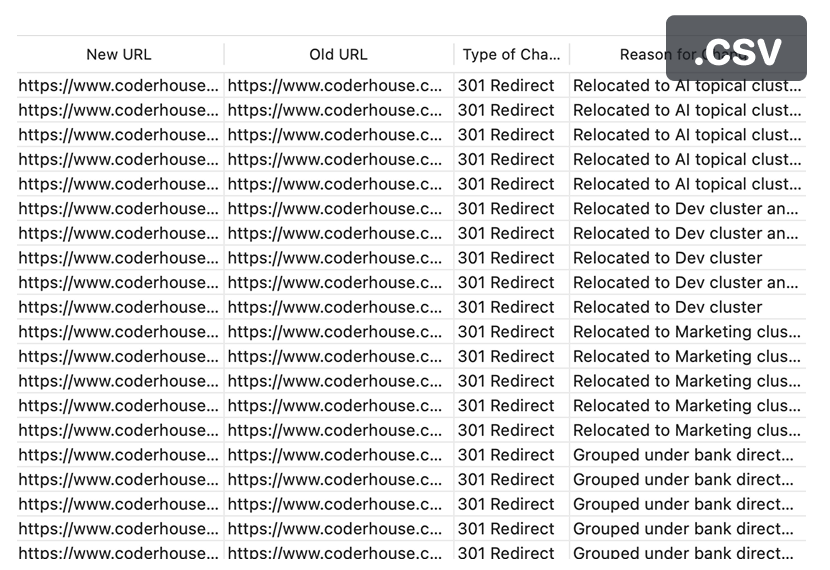
Most teams can crawl a site.
Very few can confidently restructure it.
When a site gets large, outdated, or unevenly expanded, structure becomes the bottleneck. Pages overlap. Key topics get buried. Conversion paths drift. And teams end up debating the sitemap in slides, spreadsheets, and opinion-heavy audits.
- Spot structural overlap and weak hierarchy
- Identify pages to merge, expand, move, or remove
- Reduce ambiguity across navigation, content, and SEO planning
- Create a more intentional foundation for redesigns and migrations
What You Get
A set of practical outputs that help your team go from crawl to decision to implementation.

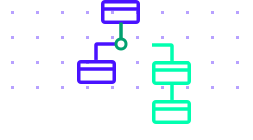
AI 🧠 Optimized Sitemap
Generates an optimal site structure and tags based on your existing IA and industry. Designed to improve organization, UX, and discoverability.
*Paid Pro Feature
AI 🧠 Analysis & Architectural Plan
Analyses +15 heuristics on what to consolidate, reorganize, plus generates new topical clusters for better SEO, UX, and AEO.
*Paid Pro Feature
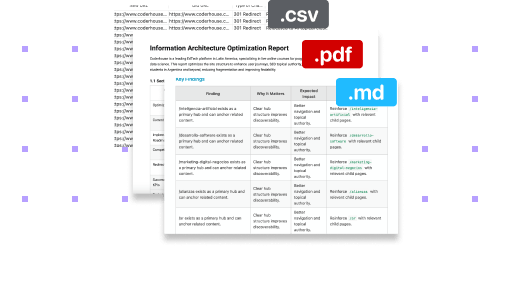
Multiple Report Formats
Shareable deliverables like redirect-ready exports and planning assets your team can actually use during execution.
*Paid Pro Feature
See the Transformation
From bloated structures to clearer topic groupings, cleaner navigation, and more deliberate page relationships.
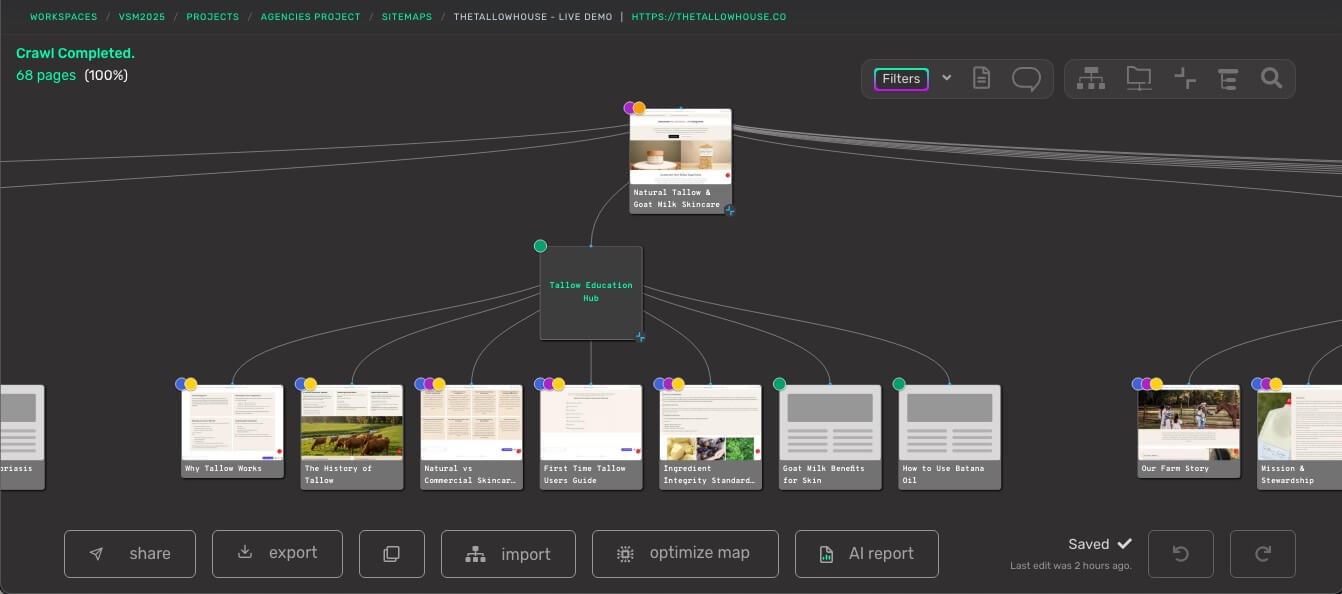
E-commerce
Clean up category sprawl, simplify navigation, and surface stronger product and collection pathways.
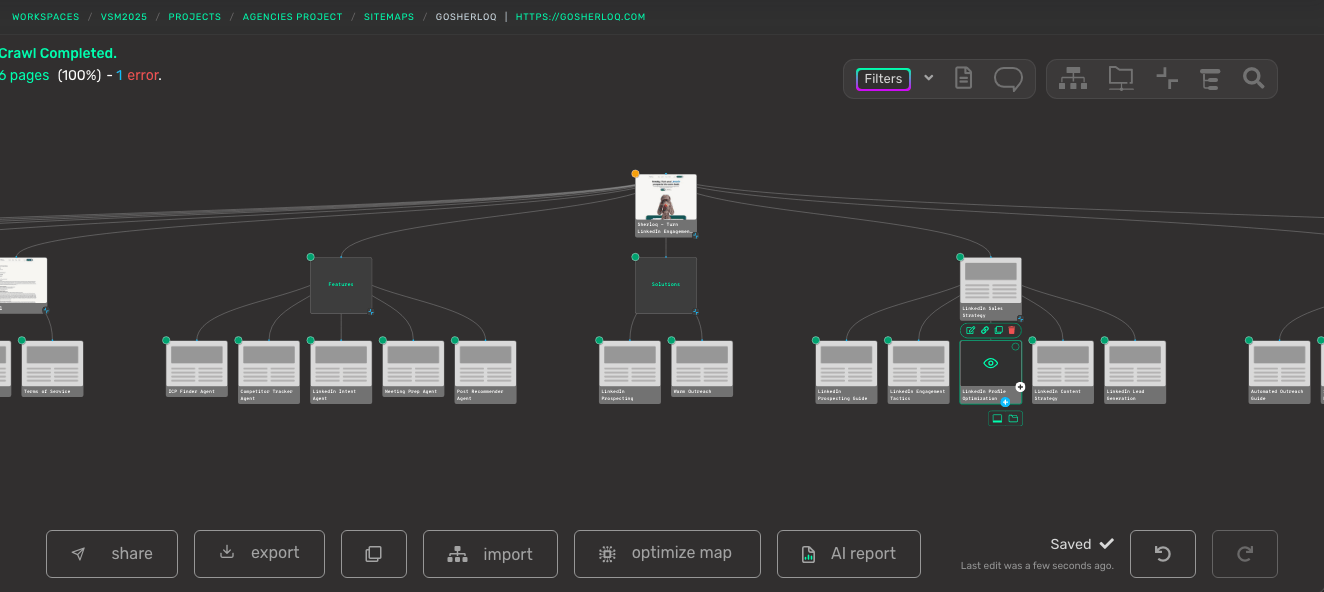
SaaS
Clarify solution pages, improve topical grouping, and support better discovery across feature and use-case content.
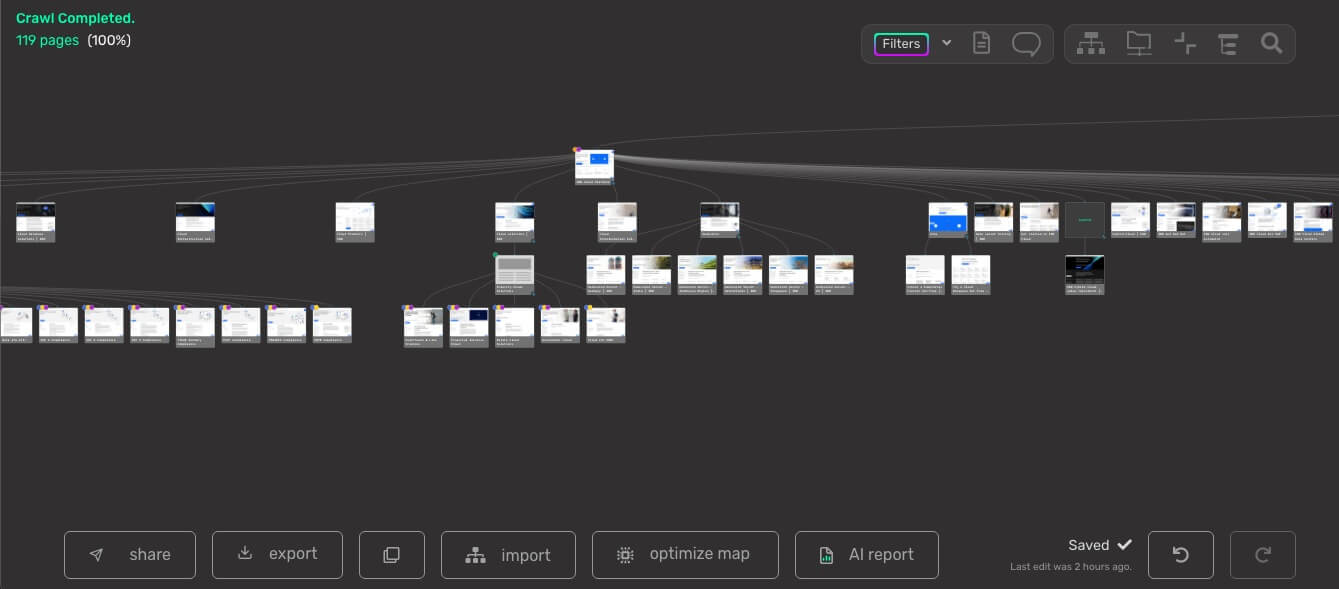
Content-Rich Sites
Reduce overlap, improve thematic organization, and create stronger internal pathways across large content libraries. URL : IBM.com/cloud
Hundreds of hours saved for






What AI-Optimized Sitemaps Helps You Do
Built for teams that need structure-level insight, not just another content tool.
Improve Sitemap Clarity
Create a more coherent architecture with better page relationships, cleaner grouping, and clearer hierarchy.
Find Structural Gaps
Spot missing topic hubs, underdeveloped areas, and weak content pathways that reduce discoverability.
Reduce Overlap
Identify where pages compete, duplicate intent, or weaken the overall structure by saying too much of the same thing.
Support Better UX
Make navigation easier to understand and create more intuitive journeys through your site.
Prepare for Redesigns
Use a stronger structural plan before new UI work begins, so teams are designing on a better foundation.
Accelerate Planning
Give marketers, strategists, SEOs, and UX teams a faster starting point for architecture decisions.
Guide Migration Work
Create more deliberate redirect and restructuring plans when consolidating, moving, or retiring pages.
Strengthen Topic Organization
Build a more intentional structure that supports topical authority and better content relationships.
Generate Shareable Deliverables
Export assets your team or clients can review, discuss, and act on without reinventing the work elsewhere.
Without AI-Optimized Sitemaps |
With AI-Optimized Sitemaps |
|---|---|
| Manual review across spreadsheets, screenshots, and opinions | A clearer starting structure built from the existing crawl |
| Harder to spot overlap, gaps, and weak hierarchy | Recommendations that highlight what needs attention first |
| Longer alignment cycles across teams | Faster conversations around a shared structural plan |
| More uncertainty going into redesigns or migrations | Better planning inputs before implementation begins |
| Outputs that are harder to hand off | Shareable deliverables for internal teams and clients |
Who This Is For
Especially useful for teams working across content structure, SEO planning, UX strategy, and site change initiatives.
Agencies
Deliver clearer structural recommendations and more strategic sitemap outputs for clients.
SEO Teams
Improve topic organization, reduce overlap, and support stronger discovery pathways.
UX and IA Teams
Use the crawl as a foundation for better navigation, grouping, and user-centered architecture work.
In-House Marketing Teams
Get a more practical structure for campaigns, discoverability, and long-term site improvement.
Content Strategists
See where topic coverage is uneven and where structure needs to support stronger content intent.
Redesign and Migration Teams
Start restructuring work with more confidence before pages move, merge, or get rebuilt.
How It Works
A simple flow: crawl the site, run AI optimization, review the structure, and move into action.
1. Crawl the Site →
Start with an existing VisualSitemaps crawl of your website.
2. Run AI →
Generate structure-level recommendations from the map and its pages.
3. Review the Plan →
See what to keep, change, consolidate, expand, or rethink.
4. Implement →
Export the outputs and use them to guide redesign, migration, SEO, or IA work.
Frequently Asked Questions
AI-Optimized Sitemaps is a VisualSitemaps feature that turns an existing crawl into a more strategic sitemap structure with recommendations that support AI discovery, SEO, and UX planning.
Yes. The feature works from an existing VisualSitemaps crawl, so it can analyze your current site structure and generate recommendations from that map.
It is especially useful for agencies, SEO teams, UX and IA teams, content strategists, in-house marketers, and teams planning redesigns or migrations.
You get an optimized sitemap structure, recommendation outputs, and planning assets that help your team review, prioritize, and implement structural changes more efficiently.
No. It is also valuable for UX, information architecture, content strategy, redesign planning, and migration work where the site structure needs to be improved before execution.
Yes. It is especially useful before redesigns, replatforming, consolidations, and other site changes where teams need a clearer structural plan and stronger handoff outputs.

Case Study
See how stronger structure can improve planning clarity and site direction.

Practical Guide
Learn how to use sitemap-level recommendations to support SEO, UX, and architecture decisions.
